Building a Monte Carlo Path Tracer
As part of my coursework in computer graphics in 2013, I implemented a custom Monte Carlo path tracer. Path tracing is a fundamental rendering algorithm that simulates the physical behavior of light to create highly realistic images, calculating global illumination by tracing rays of light as they bounce around a 3D scene.
Rendered Results #
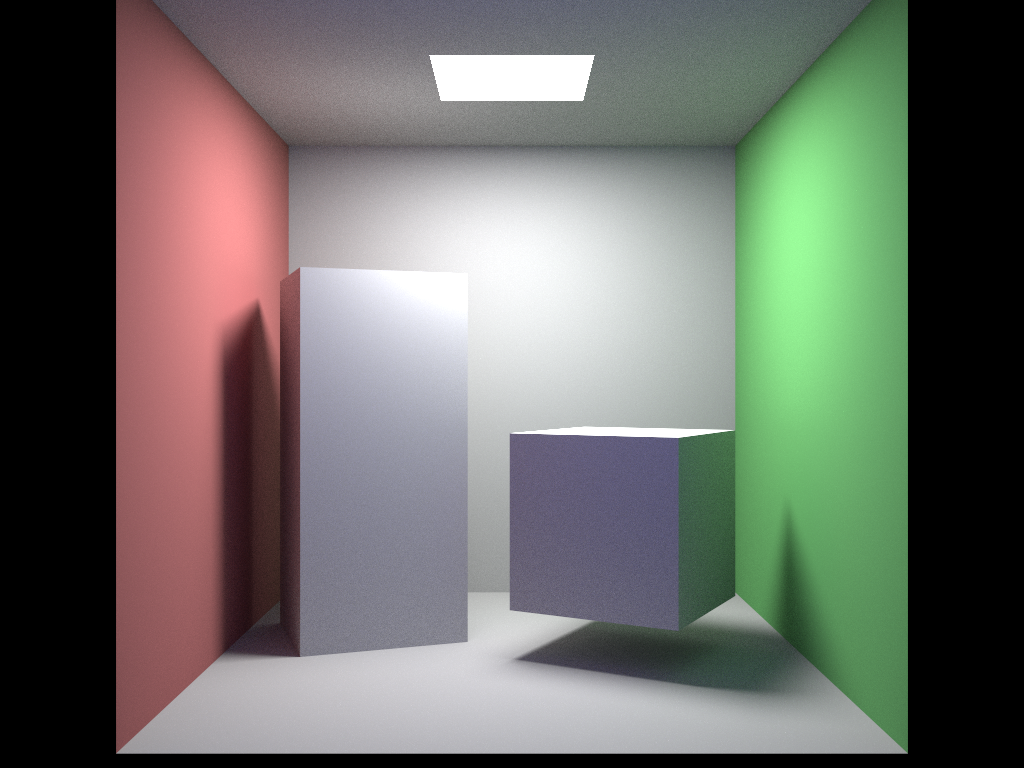
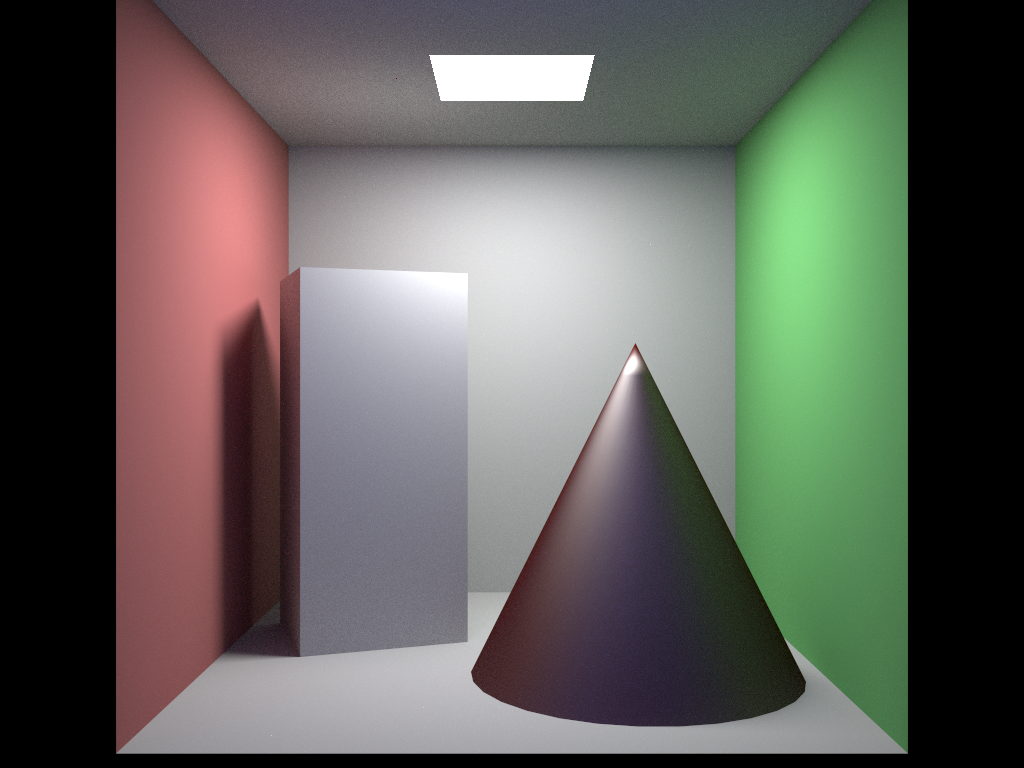
Below are two sample scenes rendered using the engine. The first demonstrates soft shadows, diffuse reflection, and color bleeding in a classic Cornell Box environment. The second showcases a reflective cone with complex light interactions and specular highlights.
Technical Specifications #
To achieve these results without overwhelming noise, the engine was built with the following configurations and features:
- Resolution: 1,024 x 768 pixels.
- Materials: Support for both Lambertian (perfectly diffuse) and Phong (specular highlight) Bidirectional Reflectance Distribution Functions (BRDFs).
- Sampling Strategy: Cosine-weighted importance sampling to significantly reduce variance in the final render.
- Lighting: Explicit direct lighting calculations enabled.
- Optimization: Russian Roulette path termination enabled to efficiently stop tracing paths that contribute little to the final pixel color.
- Path Constraints: Minimum path length of 2 bounces.
- Sample Count: 6,400 samples per pixel to ensure a smooth, high-fidelity final image.